This article contains affiliate links. If you make a purchase through these links, we may earn a small commission at no extra cost to you. This does not influence our editorial decisions or recommendations.
With the rise of forced induction over the last few decades, intercoolers are now one of the most common upgrades for performance car owners. It’s not hard to see why: The engine's working hard, the turbo's working nicely, and you're seeing decent power figures, right up until thermal soak sets in. After thirty minutes of hard driving, track sessions, or pushing it repeatedly, intake temperatures climb. The car feels sluggish. It's not your imagination. The stock intercooler can't handle sustained thermal load, and once charge air temperatures start rising, you're losing power and putting unnecessary stress on the engine.
I've specified many different brands of intercoolers for customers with German performance vehicles for years now. It's one of those components where you see an immediate distinction between proper engineering and cost-cutting. Having advised on numerous cooling solutions at JBM Performance, I know what separates a genuine upgrade from something that only looks the part.
The most common platforms for intercooler upgrades in the workshop are usually the most tunable and give you a great return on horsepower for your money.
In our case, the EA113 platform (the older 2.0 TFSI in Mk5 GTis - 6 Golf R’s, Audi A3 8P, and SEAT Leon), or the newer EA888.3 generation (Mk7 GTi onwards, newer A4, S3, Leon Cupra), both suffer from the same cooling deficit when tuning for “Stage 2” and beyond.
Your turbo's capable of more, your fuelling's capable of more, but the intercooler is the bottleneck. I've seen this across other platforms too. BMW's N54 and N55 engines have the same thermal soak issues. Ford's EcoBoost platforms face it. The problem is universal wherever engineers have prioritised packaging and cost over optimal cooling.
What separates solutions is the engineering approach, combined with practical solutions for any enthusiast, and that's where Direnza consistently stands out.
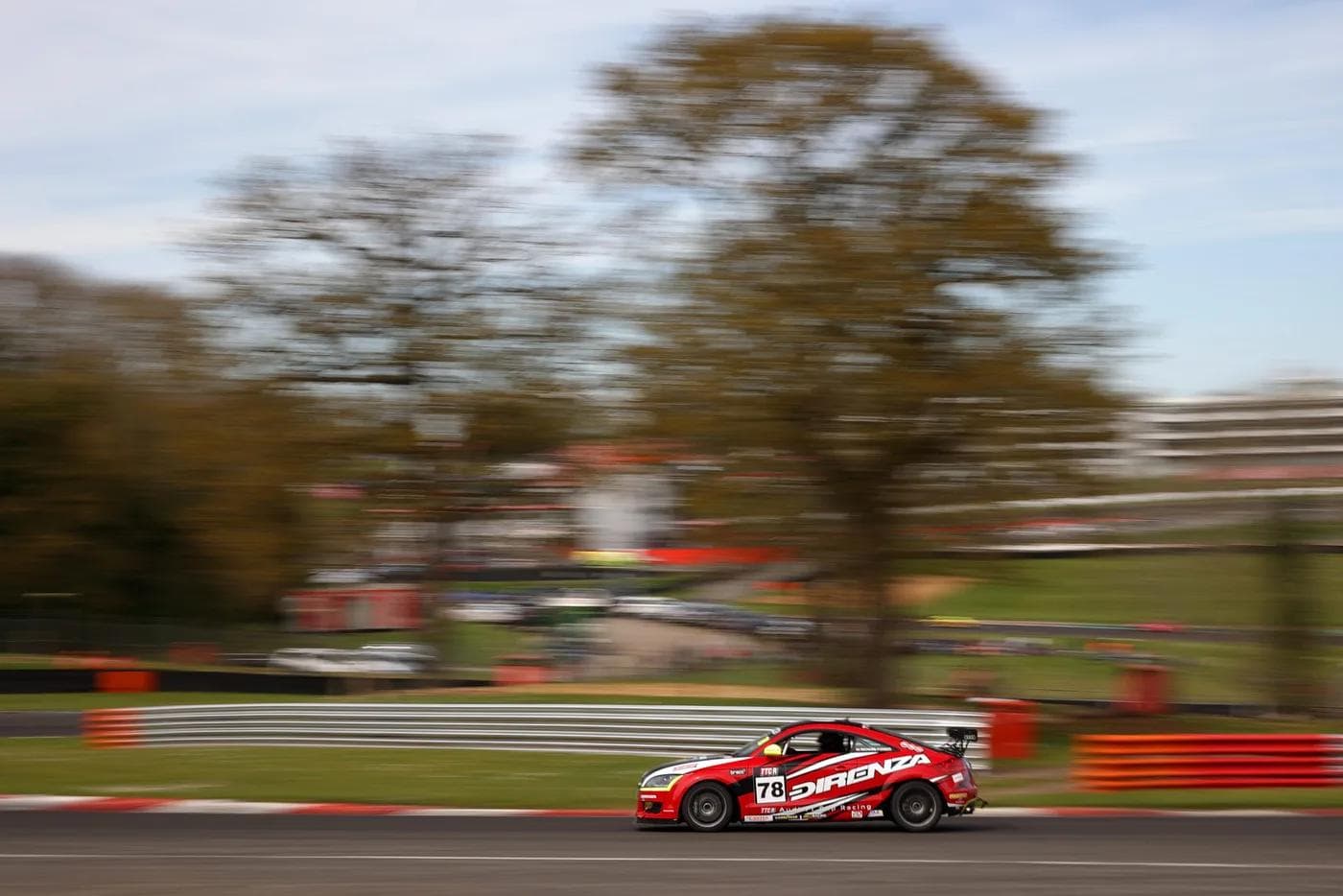
2024 Audi TT Cup Racing Championship
© Direnza
What Makes Direnza Different
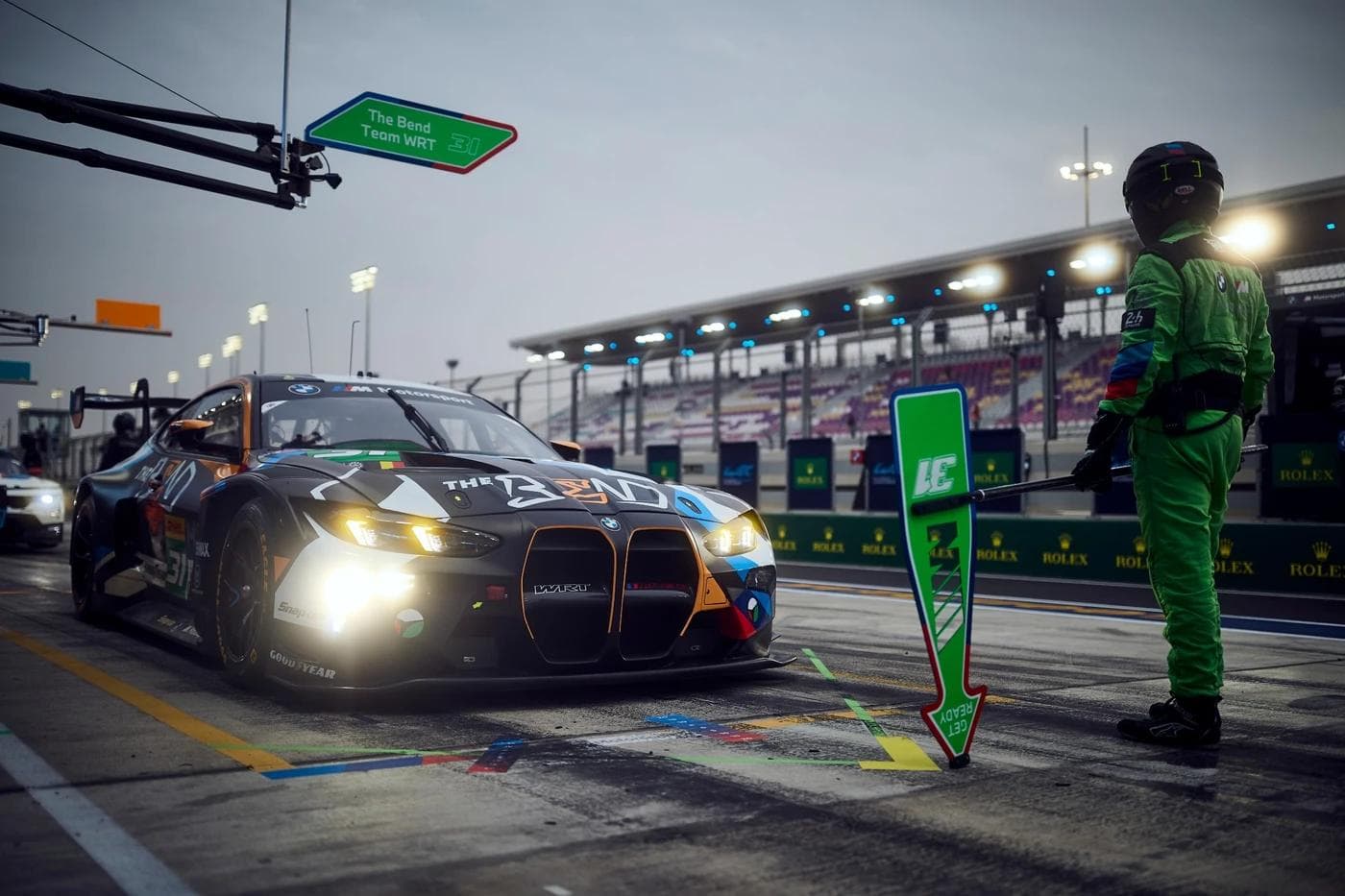
Direnza uses motorsport as a test bed for new product concepts, sponsoring and supporting teams across multiple disciplines to improve quality, durability and reliability. It’s not just a show for their marketing. They've built their reputation on it, and you see it reflected in their product design across every platform they cover.
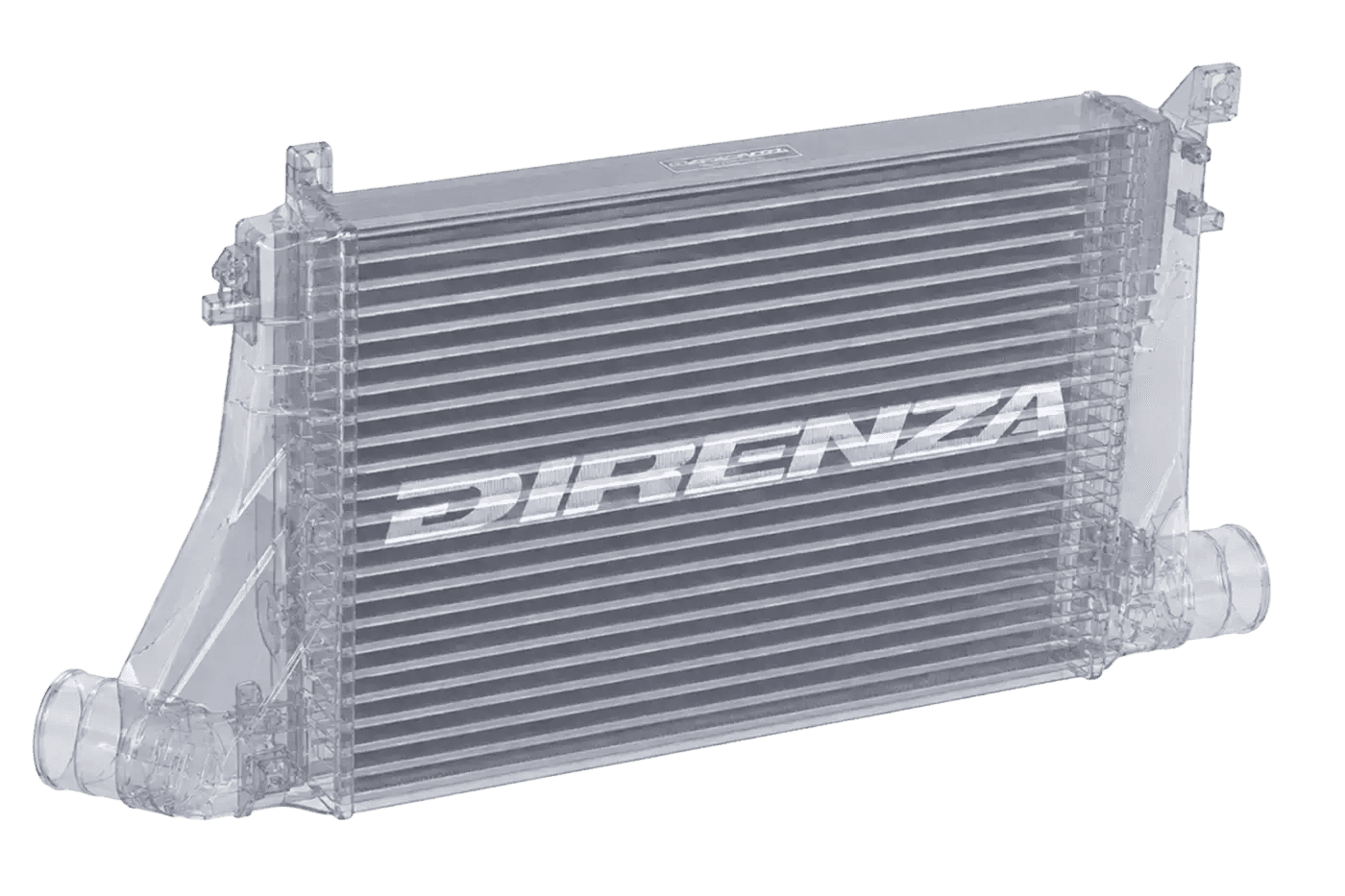
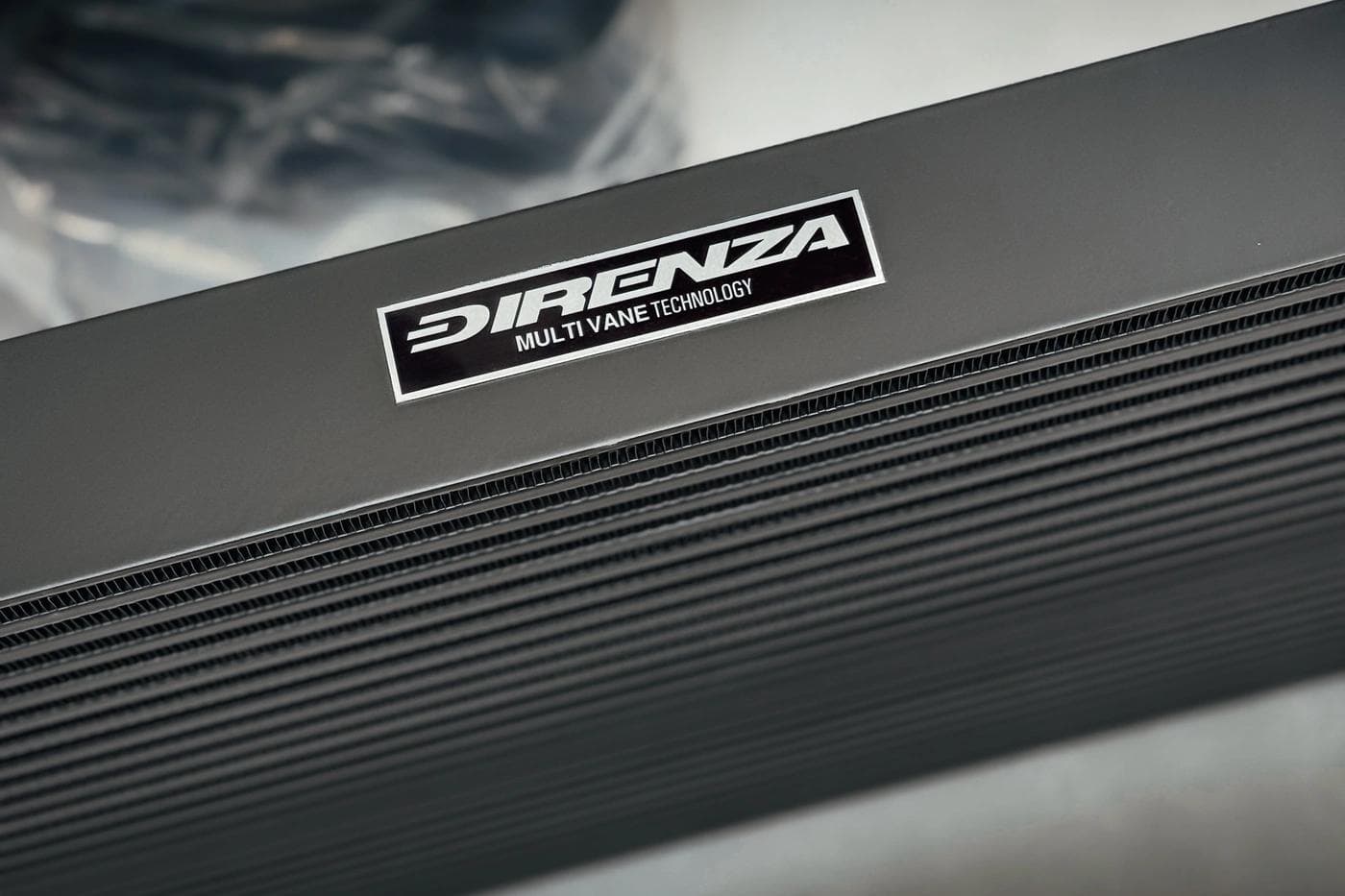
Their Multi Vane Technology (MVT) is the innovation that separates them from most aftermarket options. MVT technology, designed by Direnza, offers greater intercooler efficiency than other aftermarket alternatives. This is achieved through the use of carefully placed vanes in the end tank, which evenly distribute air across a much larger area of the intercooler core. Rather than letting boost flow hit the core in a concentrated zone, the vanes redirect that flow across the entire surface.
The construction is TIG-welded for strength and durability. The fitment is engineered for specific platforms; no custom bracket fabrication required.
For the 2.0 TFSI platforms, Direnza is so popular because they position their intercoolers correctly: well-priced without being cheap. You're paying for value. You get an engineered cooling solution that fits and isn’t a fancy label. The same principle applies across their entire range of products.
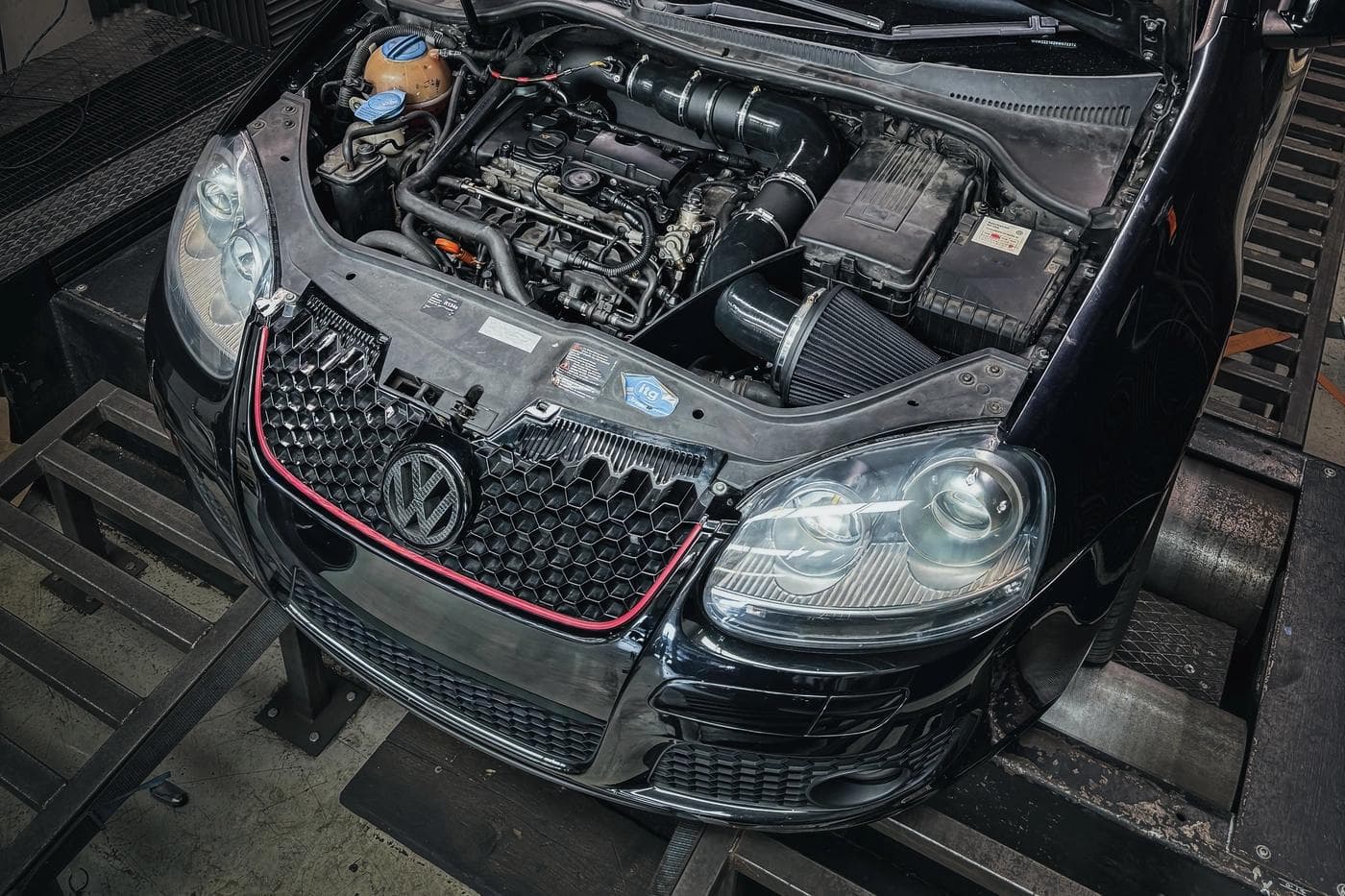
Where Your Stock Intercooler Falls Short
The stock intercooler on any turbocharged engine follows the same design logic: it's sized for the performance it was designed for, and in most cases, nothing more. Cost saving is of course a factor. Packaging constraints mean it sits in a space engineered around road-car duty cycles, not track work or sustained hard driving. The internal design doesn't optimise air distribution across the full core surface. You get hot spots. Air bypasses sections of the cooler, so you're not using the full core area you're paying for in terms of size.
This is where most aftermarket intercoolers fall short. They're bigger, sure, but bigger without intelligent design is just adding mass and cost. I've seen plenty of oversized coolers that don't actually perform better because the internal architecture is flawed. Direnza's MVT design means the cooler's actually working across its entire surface, not just the sections where boost naturally flows.
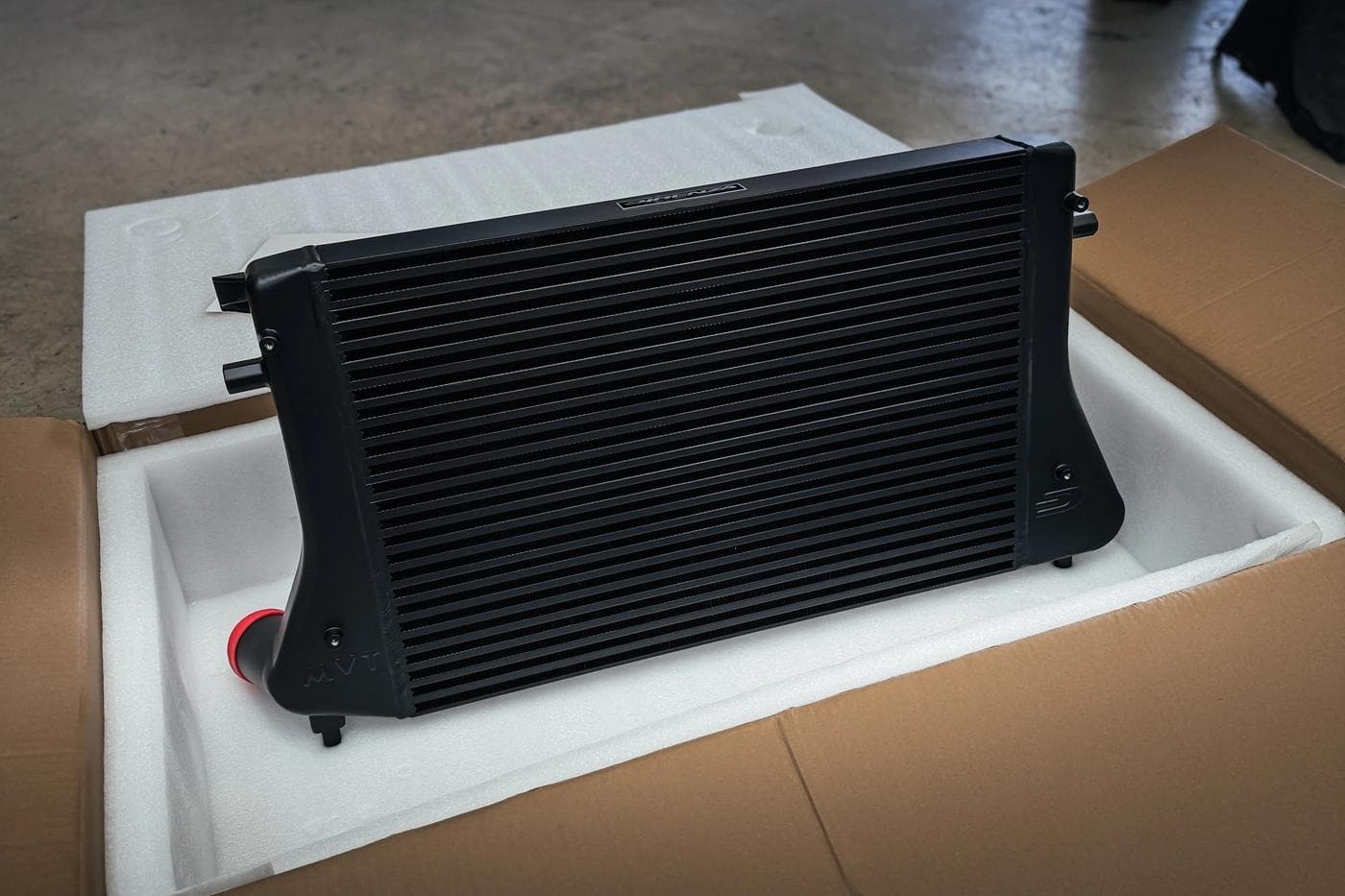
Fitment and Installation: In the Workshop
I've overseen a ton of intercooler installations across multiple platforms in the workshop. Fitment quality can end up costing you more. If it doesn’t fit right, you’ll either be spending more time to cut, bend and weld, or you’ll be charged by the workshop for the additional labour. Cost-cutting on a quality product can end up costing you in time. I know where I’d rather put my money.
On the VAG EA113 and EA888.3 engines, most aftermarket intercoolers are front-mount designs. The pipework layout is straightforward: you're connecting the turbo outlet to intercooler inlet, then routing cooled charge air to the intake manifold. The challenge isn't complexity, it's making sure the design is consistent and the hose connection points meet where they should. If the inlet and outlet diameters don't match properly, you're either forcing connections (introducing leaks) or relying on oversized adaptors (increasing turbulence in the wrong areas, and hurting cooling efficiency). Direnza's VA platforms come with properly sized ports. The fitment is tight. No guessing, no adaptor stacking.
BMW's N54/N55 platforms are tighter still. You're working in a more compact engine bay, and intercooler placement becomes critical. The cooler has to sit in a specific position to clear other components whilst maintaining adequate airflow. I've found Direnza's engineering approach obvious here. They've mapped the space and built the cooler to fit it properly.
From my perspective, proper fitment means fewer future issues. A badly fitted intercooler develops vibration-induced cracks. It doesn't seal correctly, and cooling performance degrades gradually. A properly engineered part lasts because it's been designed to, not hoped to.
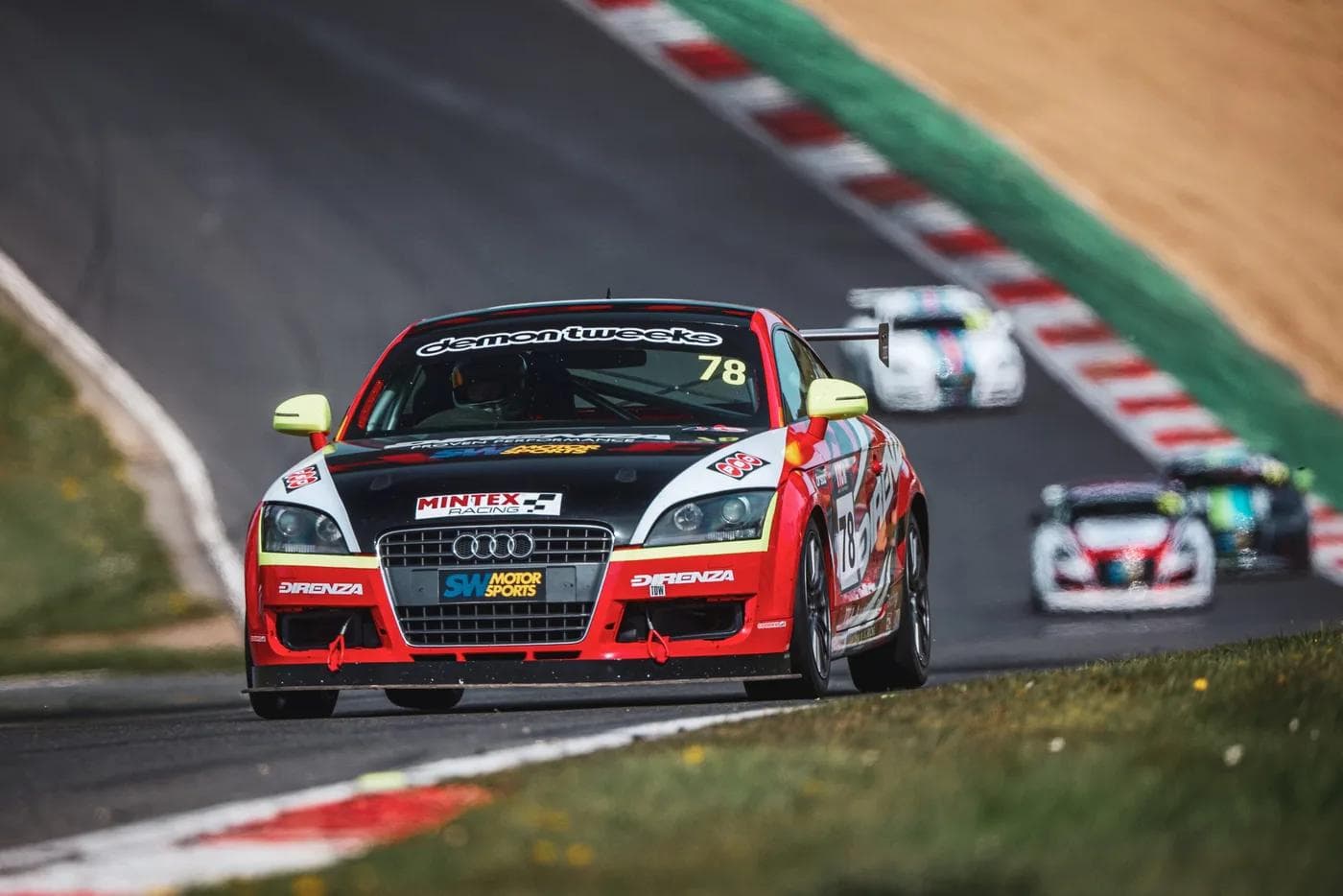
2024 Audi TT Cup Racing Championship
© Direnza
Real-World Thermal Performance
Looking at the data, stock intake temperatures were measured at 33°c. With MVT, intake temperatures reduced by 45%, down to just 18°c. That's on an EA113-based platform.
A 45% temperature reduction is a significant metric. That will really give your engine tuner a lot more ignition timing to play with. With the majority of stock intercoolers, you're managing thermal soak by short-shifting, backing off boost, or waiting between acceleration runs. With an intercooler like the Direnza MVT cooler, you're holding consistent charge air temperatures through multiple hard runs. Think about it this way: that's the difference between driving at your engine's potential and driving around its limitations.
An engine tune adds power, but if the intercooler is maintaining cooler intake temperatures, the engine sustains that additional power consistently. You're not hitting a thermal wall halfway through a track day. I've seen owners go from struggling through a second track session to running four or five consistently quick sessions because the intercooler's actually managing the heat.
Direnza Across Your Platform
Whichever car you have, Direnza's got a ton of engineered solutions. The fitment's precise, and I can vouch for that from real workshop experience at JBM Performance, a Direnza dealer and installer. The cooling performance is consistent because the MVT technology actually works.
If you've had a map done or you're planning one, intercooler cooling is a great and logical next step. The older thermal management in earlier platforms means the cooling upgrade is more noticeable, and that's where you'll see the best return on your investment.
What Actually Changes
If you've had your engine tuned or you track your car, a proper intercooler will help maximise your engine’s potential. If you're yet to get it tuned, fit one before you get it tuned, not after. You want the engine tuner to get the most out of the additional cooling, which gives them a hell of a lot more to work with. If you fit one after a tune, you’ll want to go right back and get it tuned again.
This isn’t one of those normal discussions, should you or shouldn’t you. Unless you have an efficient cooling system in place already or you only daily drive it, you should upgrade your stock intercooler. Direnza is a great place to start. They're very well-priced without being cheap. You're getting what you pay for.