The horsepower craze has gotten out of hand. Manufacturers are printing bigger and bigger numbers, buyers are chasing them, and somewhere in the middle, the actual experience of driving a fast car has gotten lost.
This is a subject that really gets under my skin.
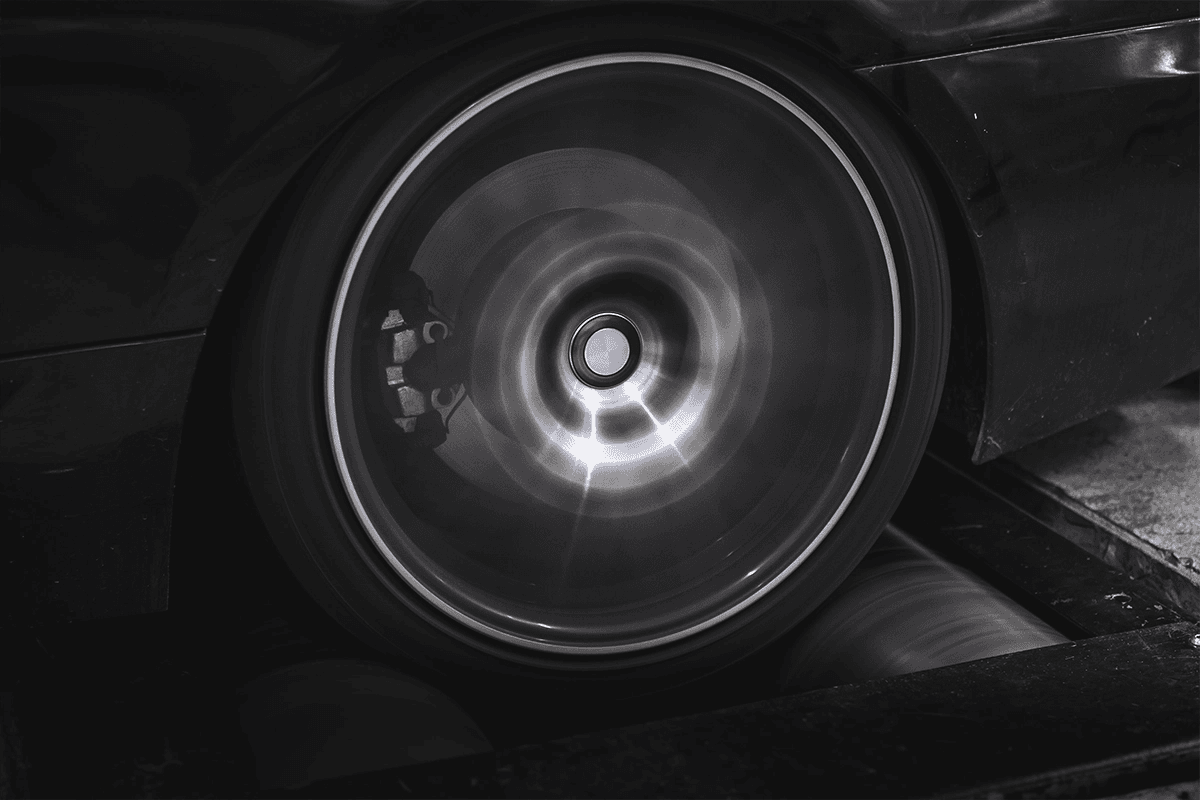
What no one seems to understand is that peak power is measured at one single point in the rev range, under controlled conditions, on an engine that has been prepared to perform. It’s one number among many and tells you almost nothing about how a car drives, how fast it actually is, or what kind of driving the engine is best suited for.
We actually took a car to Mallory Park during my degree and data logged the whole thing with a Motec system, measuring everything simultaneously, not just engine output but suspension loads, braking forces, lateral g, the complete picture of what a car is doing at every point on a lap. What that kind of analysis makes immediately clear is that peak power is one data point among dozens, and rarely the most interesting one.
Horsepower has become a number that goes into thin air when people hit the accelerator pedal because it’s not usable anymore.
The Number Is Real. The Context Is Not.
Every engine produces power differently. The quoted figure is the peak, the top of the curve, the best the engine can do under ideal circumstances, and how that number is actually produced is worth understanding before you take it at face value. But you do not drive at peak power. You drive across the entire rev range, through corners, on roads with imperfect surfaces, in conditions the dyno never sees. What I’m trying to get at is that horsepower as just a number, doesn’t really mean much without more information.
Torque curve shape is what actually governs how a car feels to drive, and most buyers never have the opportunity to look at it. A flat torque curve, one that delivers strong, consistent force across a wide rev range, produces a car that responds predictably to throttle input at almost any point. A peaky engine, one that builds hard toward the top of the rev range and drops off sharply, demands far more from the driver to extract anything useful from it.
Two engines can share an almost identical peak power figure and feel completely different in every real-world situation. Let’s take two different BMW M3s to demonstrate what I mean.
The E92 M3 and the F80 M3 are good examples of this scenario. They don’t make identical power, but it’s their architecture that is the real demonstration here. Both are exceptional cars, and I would own either without hesitation. But the naturally aspirated V8 in the E92 delivers its power in a way that feels linear, progressive, and deeply connected to the throttle pedal. The turbocharged inline-six in the F80 is faster on paper in most situations, but the delivery is a different conversation entirely, particularly with an aggressive or poorly calibrated tune. Mid-corner, if you are trying to manage the rotation of the car with the throttle, a power spike from a turbo that is not calibrated with drivability in mind makes the car harder to place precisely. It’s not that the F80 is uncontrollable, but that the margin for error narrows in a way that the E92 simply does not ask of you.
I’m not here to bash horsepower and the concept of increasing engine performance. I love the thrill. Engines are my jam. I work at an engine tuning garage, of course it gives me the fizz.
But the amount of cars we’ve seen come in for tuning that have no other mods or consideration to performance beyond booting it between the traffic lights to compete for the attention of other men is bewildering.
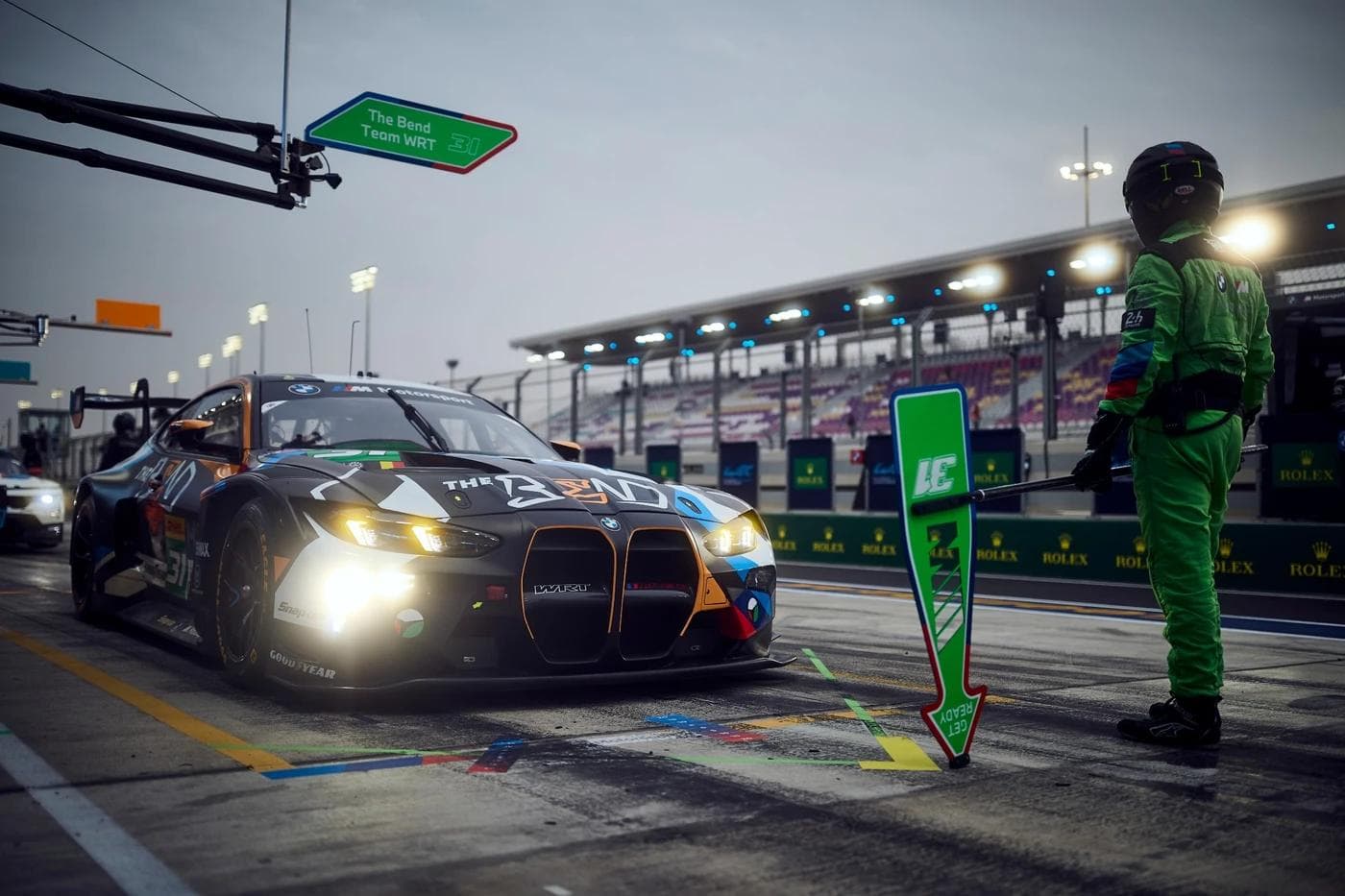
Compete on the track. It’s way cooler.
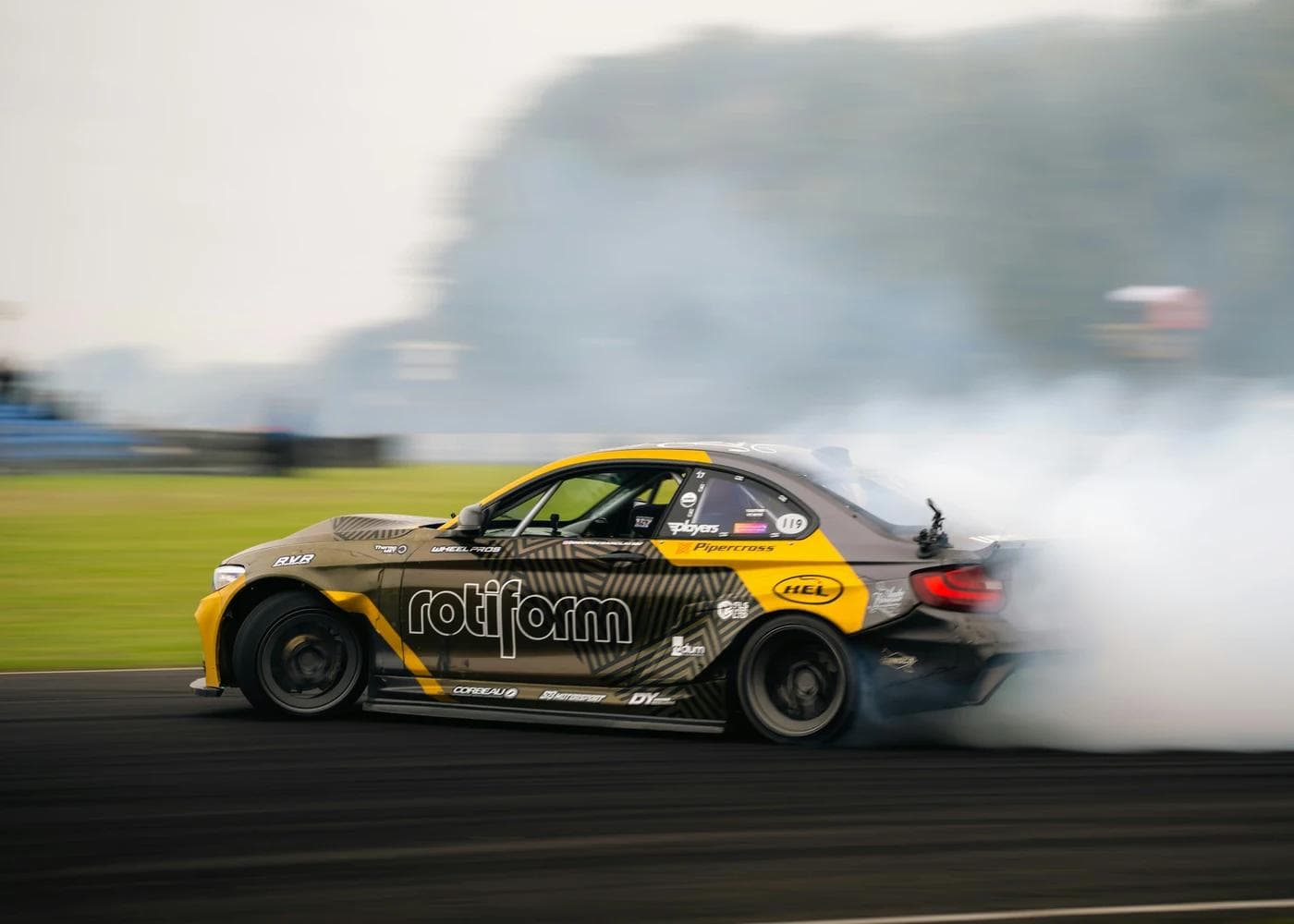
To be clear, this is not an argument against fun. Wheel spin, drifting, and a good burnout all have their place. I love a bit of vehicular entertainment.
The gripe I have is when people are seemingly confusing entertainment with performance, and assume that because something feels or sounds fast, it is fast. It's the misconception I'd love to see changed, so more people build cars that can perform and the modification choices that follow lead to real improvements.
Then I want them to take it to the track to really see the benefits.
What to Actually Look At
If peak power is the wrong number to lead with, what should you actually be looking at?
As a starting point, find the torque curve rather than the peak figure. Most manufacturers publish this if you look past the brochure. What you want to see is where peak torque arrives and how wide the band is before it drops off. A car that hits strong torque early and holds it across a broad rev range will feel faster in the real world than a car with a higher peak figure that only arrives at the top end.
Beyond that, the power-to-weight ratio is a more honest headline number than power alone. A car producing 300 horsepower and weighing 1,100kg is a fundamentally different proposition to one producing 400 horsepower and weighing 1,800kg. The lighter car will frequently feel quicker everywhere that is not a straight line.
Finally, look at what the chassis is actually set up to do with the power. Differential type, suspension geometry, and tyre width are not footnotes.
Differential type matters more than most realise. An open differential will always send torque to the wheel with the least resistance, which under hard acceleration or mid-corner load, is typically the inside wheel that is already losing grip. A limited-slip differential, whether it is a torque-biasing type like a Torsen or a clutch pack unit, actively manages that distribution and keeps power going to the wheel that can actually use it. The contact patch of the tyre is where performance is either gained or lost, and the differential is a factor that decides which.
They are the difference between a power figure that reaches the road and one that disappears into tyre smoke.
© Jack Stapleton
Horsepower You Cannot Use Is Not Horsepower
I fitted a limited-slip differential to one of my own cars many years back. Best modification I’ve ever done to a car. A MK5 VW Golf GTi running approximately 380 horsepower. It was spicy, and naturally, traction was limited when pushing.
Before the LSD, that power figure was largely theoretical in any situation that involved cornering, acceleration out of a bend, or any surface that was not perfectly smooth and dry. The inside wheel would spin, traction would break, and the car would either squeal or fire wide, depending on the road surface or corner.
After the LSD, the car just pulled. Through corners, under hard acceleration, in situations where the open differential would have given up, the power was actually reaching the road. The front end had traction and feel that simply did not exist before. The horsepower figure did not change by a single number, but the usable performance of the car transformed completely.
That experience taught me something that I see confirmed regularly working in the performance sector of the automotive industry: customers come in chasing power figures without any thought for whether their brakes, tyres, suspension, or differential can actually use what they already have. If you actually want a car that is fast all-round, not just between the lights, brakes, tyres, and suspension will always make a car faster than outright power added to an untouched chassis. Anyone who goes straight for power without addressing those fundamentals first is not building a faster car. If you are considering a power increase, make sure you prepare accordingly.
Where to Actually Start
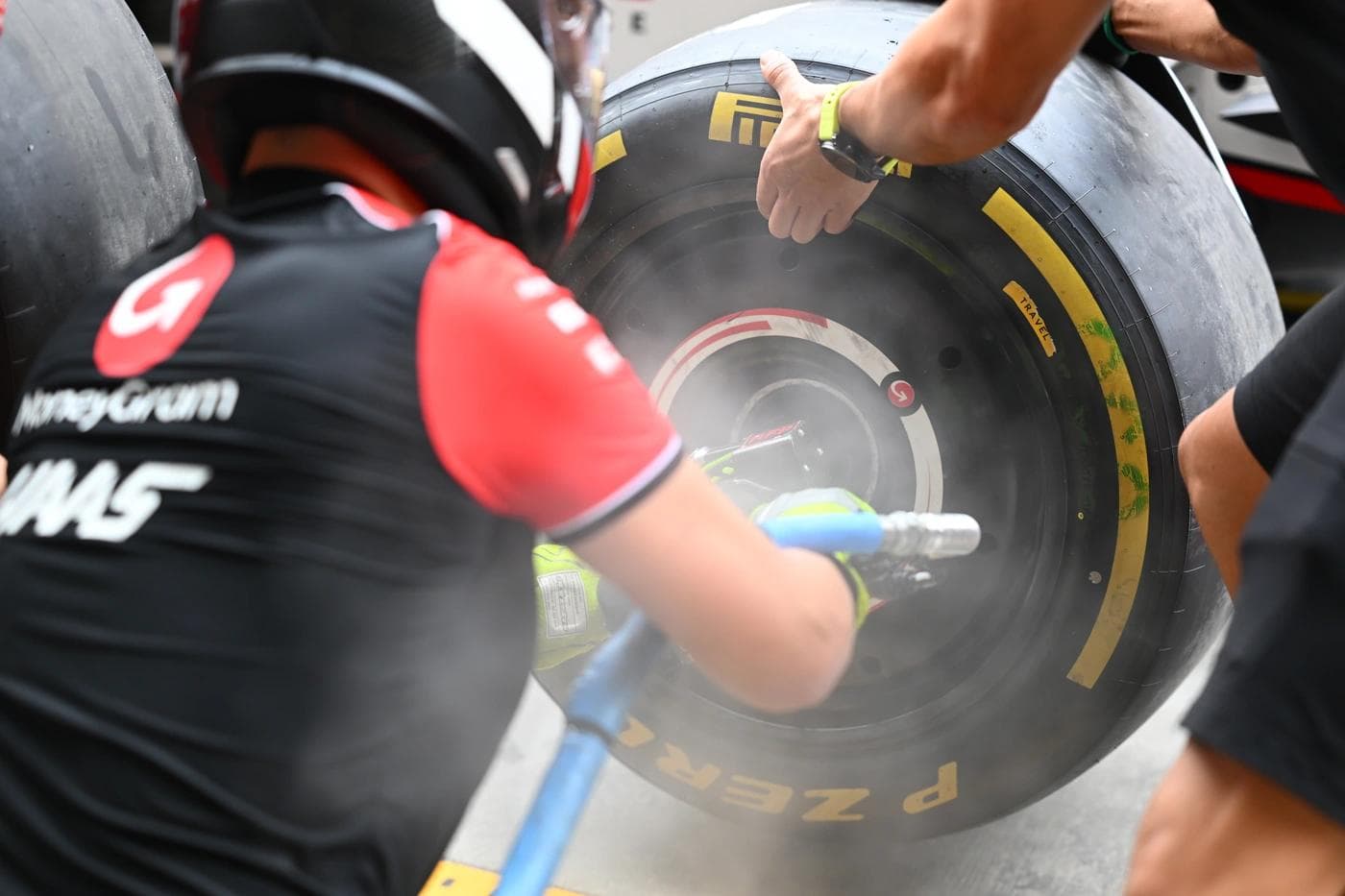
If you are building a faster car rather than just buying one, the order of modifications matters more than most people realise. The answer does depend on the car, but as a general rule, the priority is tyres first, then suspension, then brakes. Those three will give you a very capable car that can actually use what the power already has. Only once that foundation is solid does it make sense to look at a limited-slip differential and more advanced geometry work. Even on standard chassis components, a performance-oriented alignment makes a measurable difference before a single power modification is considered.
I’ll explain why this order matters: Every performance gain you make to an unresolved chassis is a gain you cannot fully access. Great suspension on a car with worn budget tyres will still perform terribly. More power on a car without the right differential will not reach the road efficiently. Each layer of the car depends on the one beneath it working correctly.
The majority of the modification industry rarely tells you this because the majority of performance parts seem to be engine-related. On top of that, selling a tune is faster, more profitable and on the streets, feels more tangible than convincing someone to spend the same money on geometry and rubber.
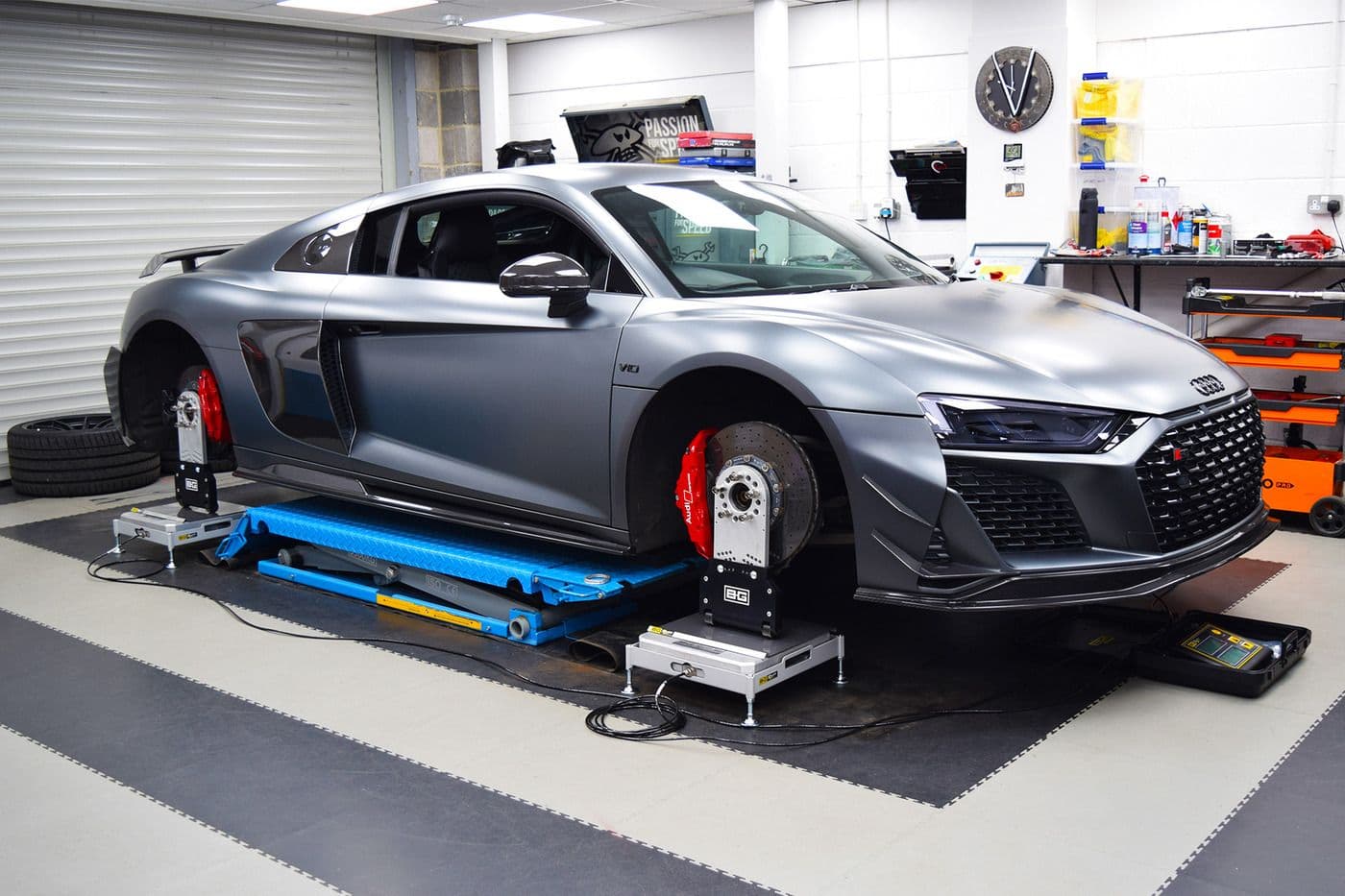
An Audi R8 V10 undergoing corner weight setup at Carbonwurks.
© Carbonwurks
The Weight Nobody Wants to Talk About
Power delivery and traction are a large part of the whole horsepower argument, but why do so many forget about what the power is moving? In many cases, a large lump.
It is worth being specific about where weight reduction has the most impact. Reducing unsprung mass, the components not supported by the suspension, such as wheels, brake assemblies, hubs, and uprights, has a disproportionate effect compared to removing the same amount of weight from inside the cabin. Unsprung mass directly affects how quickly and accurately the suspension can react to changes in the road surface. Less mass at the wheel means less inertia for the suspension to overcome, which means better contact, more consistent grip, and more accurate feedback through the chassis. A set of lightweight wheels does more for a car's dynamic behaviour than you would expect from their weight saving alone.
Weight is the variable that touches every single area of performance simultaneously. It affects how quickly a car accelerates, how short its braking distances are, how much load it puts through its tyres in corners, and how much energy the chassis has to manage when smashing it around a circuit. In most cases, a lighter car with less power will frequently outperform a heavier car with more. Not because of the power figure, but because every other system is working with less mass to manage.
The industry has largely stopped talking about this. Kerb weights are climbing, power figures are climbing faster, and the net result is cars that are objectively quicker in straight-line tests and increasingly compromised in every other area of the driving experience. So why do we find ourselves on this bewildering trajectory?
What We Should Actually Be Talking About
The horsepower obsession has reached a point where the numbers are becoming disconnected from anything meaningful. Cars do not need significantly more power than the fastest road cars already have. The engineering resource being spent chasing bigger headline figures would produce a far more rewarding result if it were redirected toward reducing weight and improving how existing power is delivered.
Part of me would argue that there is a simpler metric we could use: lap times. A lap time is the output of every variable simultaneously. Power, weight, torque delivery, traction, braking, aerodynamic efficiency, and driver confidence are all compressed into a single number that cannot be manipulated by measuring conditions or selective reporting. If a car is genuinely fast, a lap time will show it. If it is just loud, a lap time will show that too. The problem is that each vehicle would compare differently from circuit to circuit. A Yaris GR would benefit from being timed on a smaller circuit like Cadwell Park compared to something like the Nürburgring. It’s not the most reliable metric. I’ll keep thinking about this one.
The manufacturers will keep quoting horsepower because horsepower sells. But peak power is one number, measured at one moment, under conditions you will never replicate on the road. The torque curve, the weight, the chassis setup, and how the power is delivered across the rev range paint a very different picture. None of those things fit neatly on a brochure, which is precisely why they are left off it.
The next time you read a quoted horsepower figure, consider other factors beyond that. Ask yourself where in the rev range it was measured, how the torque curve looks underneath it, what the car weighs, and whether any of the chassis has been set up to actually use it.
Better yet, drive it.